

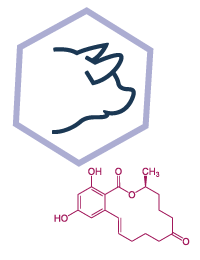



Summary
Two trials, 31 and 29 days long, were conducted to study the
performance and health of pigs treated with different amounts of
Zearalenone and to investigate the feasibility of utilizing a modified
clinoptilolite and esterified glucomannan in alleviating and/or
preventing its harmful effects.
NESIC KSENIJA*, RESANOVIC RADMILA**, NESIC V** and SINOVEC Z**
*Scientific Institute of Veterinary Medicine of Serbia, Belgrade, Serbia
**Faculty of Veterinary Medicine, University of Belgrade, Serbia
Introduction
According to toxicity and frequency of appearance in nature, Zearalenone
(ZON toxin) is one of the most important mycotoxins of Fusarium fungi that are
widely spread in Europe (Bottalico and Perrone, 2002; Logrieco et al., 2002).
Corn
is usually affected, especially hybrids with a long vegetation and high humidity
at the moment of harvest, but the fungi growth and toxin synthesis extends further
during storage (EFSA, 2004). (EFSA, 2004).
Biological activity
Biological activity of this toxin can be explained as:
- Competition with 17 ß
oestradiol for the specific binding sites at estrogenic receptors: - Interpherence with enzymes that are involved in the metabolism of steroids
(Mitterbauer et al., 2003). -
F-2 toxin exerts its effects in all metabolic processes that
are under the influence of estrogenic hormones, usually on the genital tract and in
reproduction (D'Mello et al., 1999).
Doses that are much greater than
concentrations which have hormonal effects may have genotoxic and
carcinogenic effects (National Toxicology Program, 2002).
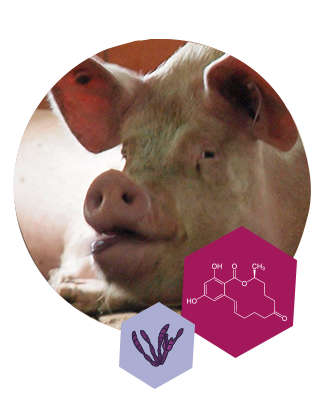
Pigs are sensitive
Pigs are more sensitive
than other animal species.(Gaumy et al., 2001)
-
Primarily manifesting
hyperestrogenism in females - Gastrointestinal lesions
- Effects on the
liver - Alterations of serum clinical chemical parameters (D'Mello et al., 1999;
Döll et al., 2003, Döll et al., 2005)
Clinical Signs
discharge are symptoms of intoxication.
In severe cases vaginal and rectal
prolapses can be seen.
Clinical signs are more expressed in immature than in
mature animals (Doll et al., 2003).
Diarrhoea, vomiting, feed refusal, body weight
loss and haemorrhages also can be seen in the clinical picture, but not only as the
consequence of zearalenone influence, but by its synergistic effect with other
toxins present in the feed contaminated with Fusarium fungi (D'Mello et al., 1999).
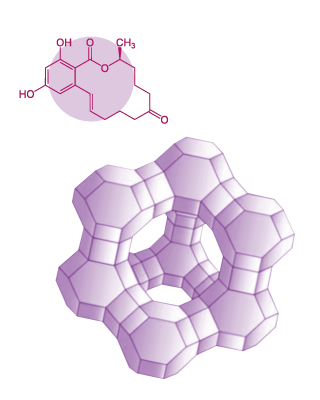
Adsorbents
The use of adsorbents is the most frequent way of alleviating and/or
preventing harmful effects of mycotoxins.
Adsorbents are substances
nonresorbable from the gut that can physically bind some chemicals and thus
block their resorption.
Several commercially available adsorbents which claimed
to bind mycotoxins were tested for both in vitro and in vivo adsorption.
Most
studies have used aluminosilicates such as modified clinoptilolite (Tomasevic-
Canovi} et al., 2003; Döll et al., 2004, Döll et al., 2005).
The feasibility of utilizing
organic adsorbents was recently examined.
Esterified glucomannan, which
belongs to this group, (Devegowda et al., 1998; Swamy, 2002) is isolated from the
inner layer of yeast cell wall and which possesses a significant capability for
mycotoxin adsorption.
performance and health of pigs treated with different amounts of F-2 toxin, but
also to assess the feasibility of utilizing a modified clinoptilolite and esterified
glucomannan aimed at alleviating and/or preventing its harmful effects.
Material and methods
Animals.
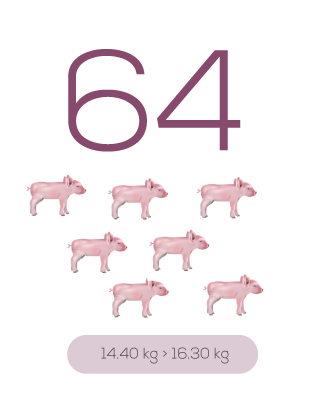
- Two trials were performed on a total of 64 pigs of Swedish and Dutch Landrace cross-breed.
- Pigs were of both sexes with 14.40 kg and 16.30 kg average body weight, 60 days old and kept in breeding pens.
- Microclimate and hygienic conditions were appropriate for this category of pigs.
Diets.
- All groups of pigs were fed with a commercial feed mixture (grower
15-25 kg) which consisted of standard feedstuffs and contained enough nutrients
to satisfy the requirements of this category. - Corn naturally contaminated with
Zearalenone (12.8 mg/kg) was used in the amount of 30% in experimental groups
of the first trial and 40% in the second trial. - Zearalenone free corn was given to
pigs in the control groups. - Mineral adsorbent Minazel Plus® was introduced in the
contaminated feed of the second experimental groups and organic adsorbent
Mycosorb® in the contaminated feed of the third experimental groups of both
trials.
Data and sample collection.
- The following data were monitored during the
trials:- body weight (BW),
- weight gain (AWG),
- feed intake (FI)
- feed conversion
ratio (FCR)
.
- Control measurments of the experimental pigs were done on a
technical scale with 10-2 kg precision.
According to these results average body
weight was calculated.
- Total weight gain was obtained from body weight
difference and daily weight gain was calculated according to duration of the trials. - The amount of mixes given to each group was measured precisely during both
experiments. -
Feed intake was identified after adding of daily amounts of feed at
the and of the trials. - Feed conversion ratio was calculated according to feed intake
and weight gain data for both experiments. - Every day observations were done
with special interest to occurrence of diarrhea and vulvovaginitis.
- Vulvovaginitis
severity was determined according to vulvar index (Evans, 2000) which was the
result of the multiplication of vulvar width and length. - Six pigs per group were
sacrificed at the end of the trials. - Immediately after sacrifice necropsy and detailed
macroscopic examinations were carried out. - In the shortest possible period
samples of vagina were taken for histological investigations. - Vagina samples were
fixed in 10% neutral formalin and absolute alcohol, embedded in paraffin, sections
of 5-8 mthickness cut and stained using the standard hematoxylin eosin method
(Scheuer and Chalk, 1986).
Results and discussion
Pigs were of adequate body weight for their breed and age at the beginning
of the trials and differences were not statistically significant (p>0.05).
Performance differed at the end of the trials between control and experimental
groups, and also between trials depending on toxin concentracions.
Pigs in the
control groups achieved the largest body weight, top weight gain and the lowest
feed conversion ratio.
According to literature data it was concluded that these
results were common for breed, sex, age and rearing conditions.
control groups it can be noted that Zearalenone had a harmful influence on body
weight which was decreased proportionally to its amount in the feed (p>0.05) i.e.
for 10.84% in the first trial and for 11.13% in the second trial.
Although body weight is a respectable parameter, daily weight gain is
reputed as a better indicator of feed quality.

Zootechnical conditions and animal health
It is particularly the indicator of
zootechnical conditions and animal health (Table 1). By comparing experimental
groups (O-I) to control groups (K) considerably lower daily weight gain, for
19.86% (p< 0.05), was seen in the first experiment and 22.27% in the second one.
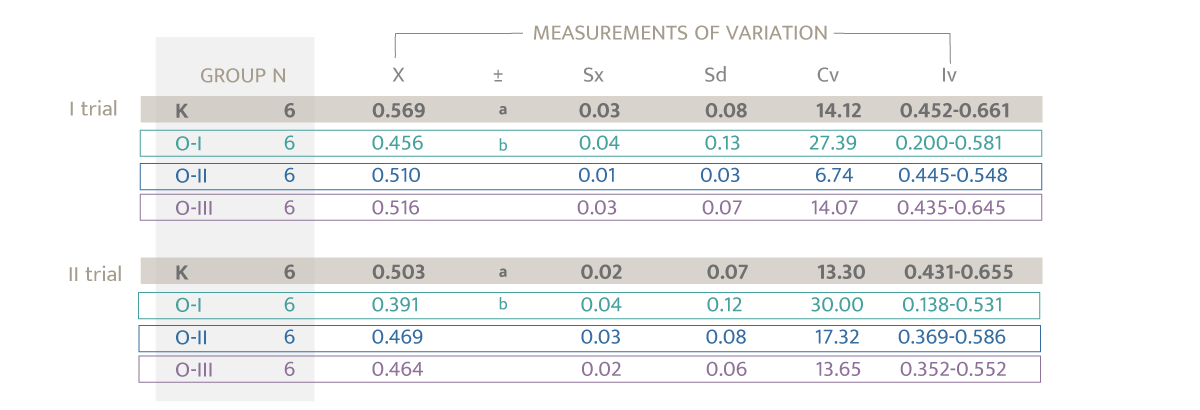
* Value expressed as x±Sd a, b, c, d p <0.05
- Application of adsorbents ensured a significant recompense of lost body
weight, i.e. it provided satisfactory daily growth. - Average body weight and daily
weight gain of pigs fed with contaminated feed with addition of adsorbents were
still lower than control values, but at the same time higher than average body weight and daily weight gain of pigs fed with contaminated feed without
protectors. - There was not any difference in the results due to type of adsorbent.
It
could be concluded that utilizing modified clinoptilolite and esterified
Glucomannan was not enough for performance of usual body weight, i.e. it could
not entirely prevent harmful effects of Zearalenone, even at its lowest dosage. But,
usage of adsorbents alleviated harmful effects of F-2 toxin also in the case of its
higher content in the feed.
Presence of F-2 toxin reduced feed intake for 5.89% in the first trial and
1.52% in the second trial, but the application of adsorbents entirely eliminated
harmful effects.
Pigs fed with feed contaminated with a lower quantity of
Zearalenone with addition of adsorbents achieved larger consumption than pigs
fed with the same feed without protectors, but it was still lower than in the control
groups.
Pigs fed with feed contaminated with higher amount of Zearalenone with
addition of adsorbents reached larger feed intake, compared to pigs in the control
groups.
There was no significant difference in the results due to type of adsorbent.
Feed conversion ratio
Feed conversion ratio, as interaction of weight gain and feed intake, differed
between control and experimental groups (Table 2).
contaminated feed reached a higher feed conversion ratio, proportionall to
Zearalenone feed content, i.e. 14.82% in the first trial and 21.08% in the second
one.
Table 2. Feed conversion ratio during the trials, kg
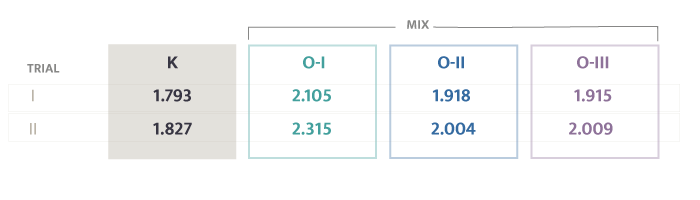
Utilization of adsorbents significantly alleviated harmful effects of
Zearalenone, but not entirely.
- Feed conversion ratio of pigs fed contaminated feed
with the addition of modified clinoptilolite was still higher than control values for
6.52% in the first trial and 8.83% in the second trial, but it was lower than feed
conversion ratio of pigs who received contaminated feed only. - Feed conversion
ratio of pigs fed contaminated feed with the addition of esterified Glucomannan
was also higher than control values (6.37% in the first experiment and 9.06% in the
second) and it was lower than conversion ratio in groups of pigs which did not get
adsorbents. -
Döll et al. (2003) also reported that feed intake and, consequently, body
weight gain of female weaned piglets receaving Fusarium toxin contaminated diet
(ZON 0.42 mg/kg and DON 3.9 mg/kg) were significantly decreased, while the
feed conversion ratio was not affected by this treatment.
Clinical signs
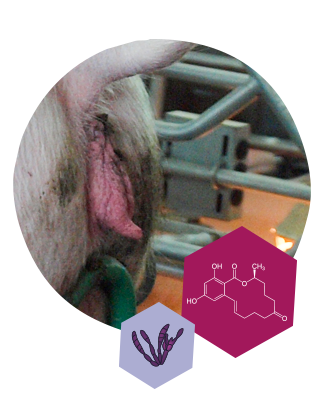
Regarding clinical signs this intoxication was manifested by vulvovaginitis in
female pigs, but also by nonspecific symptoms of gastrointestinal disorders follow
by diarrhea.
Vulvovaginitis occurrence was noticed in all experimental groups of pigs
since the third day of ingesting contaminated feed.
showed the severity of symptoms with success (Table 3).
Vulvar oedema could be
seen in groups of pigs fed with contaminated mixture without of adsorbents for 10-
15 days after dispossession of this feed.
This symptom was less obvious by
addition of adsorbents and it was present for 5-10 days after disuse of
contaminated feed.
Table 3. Vulvar index
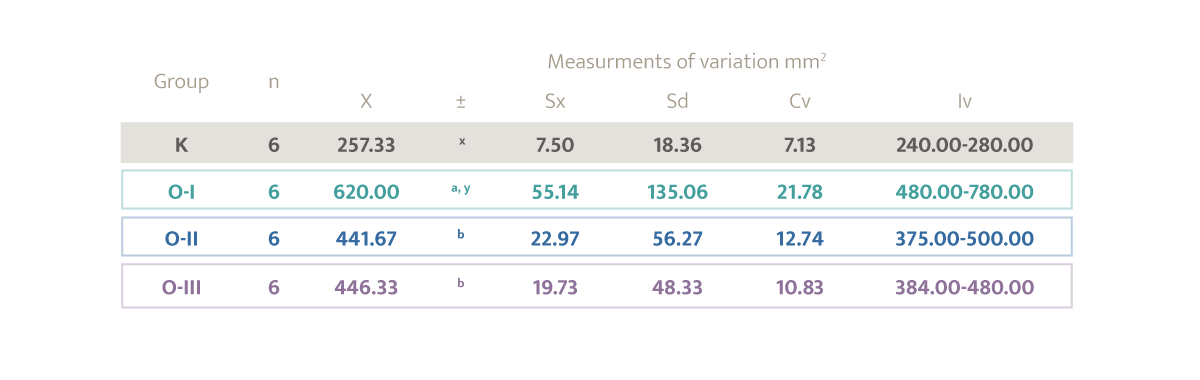
*Value expressed as x±Sd a, b, c, d p <0.05 x, y, z, w p ≤<0.01
Morphological examination of the genital organs of pigs fed with
Zearalenone contaminated feed showed macroscopic changes in the form of
vulvovaginitis primarily manifested with oedema.
Histological findings of epithelial
hyperplasia and submucous oedema were present mostly in pigs that were not
given any feed protectors.
organic one, fairly alleviated negative effects of Zearalenone.

Gastrointestinal disorders
- The outbreak of gastrointestinal disorders was also observed.
- It was noticed
since the third day of usage of contaminated feed without added adsorbents, and
since the seventh day in groups of pigs that were given protectors. - The majority of
affected pigs was seen in groups with no added adsorbents in the feed.
It is
believed that this might be result of the presence of other Fusarium mycotoxins
which co-occur in the feed. In general, combinations of Fusarium mycotoxins
result in additive effects, but synergistic and/or potentiating interactions have
been observed and are of great concern in livestock health and productivity.
(D'Mello et al., 1999; Jadamus and Schneider, 2002).
chronic primary mycotoxicosis followed by impaired growth, decreased body
weight, lower feed intake and consequently increase of feed conversion ratio
(Humphreys, 1988).
Observing performances cumulatively for both experiments it
can be found that Zearalenone provoked harmful effects proportionally to its
content in the feed (Doll et al., 2003), although this was not obviously clinically
noted in the trials considering their similar duration and only a 1.16 mg/kg dosage
difference.
Zearalenone to a certain extend, what is in agreement with remarks of Coenen and
Boyens (2001), Tomasevic-Canovi et al. (2003), Döll et al. (2004) in in vitro conditions, but much less information is available about in vivo trials (Kyriakis et
al., 2002; Döll et al., 2005).
Similar results are observed by utilizing an esterified
Glucomannan, but still lower than those reported by Devegowda and Aravind
(2002) and Aravind et al. (2003).
induces detrimental alterations of health and performance in pigs.
Addition of
modified clinoptilolite and esterified Glucomannan in the feed significantly
alleviates harmful Zearalenone effects.
Thus, the use of adsorbents as toxin
binders could be an efficient approach to reduce mycotoxin effects in animals to a
certain extant.
However, only absolute disuse of this kind of feed is a safe and
efficient method of avoiding mycotoxins.
glucomannan to counteract mycotoxicosis in naturally contaminated feed on performance and
serum biochemical, hematological parameters in broilers, Poult. Sci. 82, 571-6.
2. Bottalico A, Perrone G, 2002, Toxigenic Fusarium species and mycotoxins associated with head
blight in small-grain cereals in Europe, Eur J Plant Pathol, 108, 611-24.
3. Coenen M, Boyens B, 2001, Capacity of zeolithe to depress the oestrogenic effects of Zearalenone,
Proc Soc Nutr Physiol, 10, 177.
4. Devegowda G, Raju M, Afzali N, Swamy H, 1998, Mycotoxin picture worldwide: Novel solutions for
their counteraction. Proceedings of Alltech's 14th Annual Symposium on Biotechnology in the
Feed Industry, 241-55.
5. Devegowda G, Aravind KL, 2002, Mycotoxins: Economic risk and control. Alltech 16th Lecture Tour,
59-73.
6. D'Mello JPF, Placinta CM, Macdonald AMC, 1999, Fusarium mycotoxins: a review of global
implications for animal health, welfare and productivity, Anim Feed Sci Technol 80, 183-205.
7. Döll S, Dänicke S, Uberschär KH, Valenta H, Schnurrbusch U, Ganter M, Klobasa F, Flachowsky G,
2003, Effects of graded levels of Fusarium toxin contaminated maize in diets for female weaned
piglets, Arch Anim Nutr 57, 311-34.
8. Döll S, Dänicke S, Valenta H, Flachowsky G, 2004, In vitro studies on the evaluation of mycotoxin
detoxifying agents for their efficacy on deoxynivalenol and Zearalenone, Arch Anim Nutr 58,
311-24.
9. Döll S, Gericke S, Dänicke S, Raila J, Uberschär KH et al, 2005, The efficacy of a modified
aluminosilicate as a detoxifying agent in Fusarium toxin contaminated maize containing diets
for piglets, J Anim Physiol Anim Nut, 89, 342-58.
10. EFSA, 2004, Opinion on zearelenone, The EFSA Journal, 89, 1-35.
11. Evans T, 2000, Measurment of vulvae index as fusariotoxicoses parameter. Personal
communication. College of Vet. Med. Univ. Missouri, Colorado, NO 65211.
12. Gaumy JL, Bailly JD, Benard G, Guerre G, 2001, Zearalenone: origin and effect on farm animals,
Rev Med Vet, 152, 123-36.
13. Humphreys J, 1988, Veterinary Toxicology, 3rd ed, Baillere Tindall Comp, London, Great Britain.
14. Jadamus A, Schneider D, 2002, Long-term effect of fusariotoxins on the reproduction performance
of sows testing the effectiveness of detoxifying feed additives 700, Feed Magazine 10, 396-405.
15. Kyriakis SC, Papaioannou DS, Alexopoulos C, Polizopoulou Z, Tzika ED et al, 2002, Experimental
studies on safety and efficacy of the dietary use of a clinoptilolite-rich tuff in sows: a review of
recent research in Greece, Micropor Mesopor Mat, 51, 65-74.
16. Logrieco A, Mule G, Moretti A, Bottalico A, 2002, Toxigenic Fusarium species and mycotoxins
associated with maiz ear rot in Europe, Eur J Plant Pathol, 108, 597-609.
17. Mitterbauer R, Weindorfer H, Safaie N, Krska R, Lemmens M, Ruckenbauer KKGAP, 2003, A
Sensitive and Inexpensive Yeast Bioassay for the Mycotoxin Zearalenone and Other
Compounds with Estrogenic Activity, Appl Environ Microbiol, 69, 2, 805-11.
18. National Toxicology Program, 2002, National Toxicology Program carcinogenesis bioassay of
Zearalenone in F344/N rats and F6C3F1 mice, National Toxicology Program Technical Report
Series, vol. 235. Department of Health and Human Services, Research Triangle Park, N.C.
19. Scheuer PJ, Chalk BT, 1986, Clinical test: Histopatology, Wolfe medical Publ. Inc, London.
20. Snedecor WG, Cochran GW, 1971, Statistical Methods. The Iowa State Univ Press.
21. Swamy HVLN, Smith TK, MacDonald EJ, Boermans HJ, Squires EJ, 2002, Effects of feeding a blend
of grains naturally contaminated with Fusarium mycotoxins on swine performance, brain
regional neurochemistry, and serum chemistry and the efficacy of a polymeric glucomannan
mycotoxin adsorbent, J Anim Sci, 80, 3257-67.
22. Toma{evi}-^anovi} M, Dakovi} A, Rottinghaus G, Matija{evi} S, \uri~i} M, 2003, Surfactant
modified zeolites – new efficient adsorbents for mycotoxins, Micropor Mesopor Mat, 61, 173-
80.
 Micotoxicosis prevention