

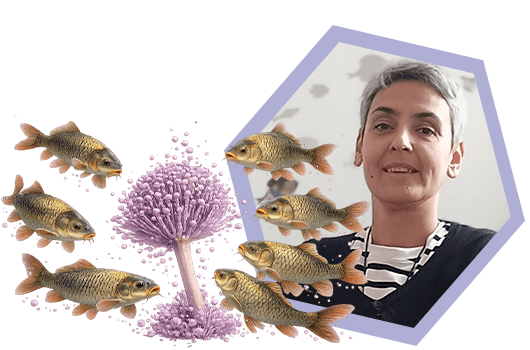



Dr. Ksenija Aksentijević is an Associate Professor at the Department of Microbiology – Fish Diseases at the Faculty of Veterinary Medicine, University of Belgrade (Serbia). With a multidisciplinary background spanning veterinary microbiology, ichthyopathology, antimicrobial resistance, and biosecurity in aquaculture, her academic and research career reflects a deep commitment to understanding the impact of environmental and nutritional factors on aquatic animal health.
Over the past two decades, Dr. Aksentijević has been involved in several national and international projects, including initiatives under the Serbian Ministry for Science and Technological Development and the European COST Action BETTER, focusing on biosecurity in aquaculture.
Her research addresses some of the most pressing challenges in fish production today—from antibiotic resistance and bacterial pathogen profiling to the presence of chemical contaminants and mycotoxins in feed and their potential transfer to fish meat. In this interview, we delve into her experience investigating the occurrence of mycotoxins in aquaculture systems, explore the connections between antimicrobial resistance and feed quality, and reflect on the future of aquatic animal production under the growing pressures of climate change and sustainability demands.

Your academic journey spans microbiology, ichthyopathology, antimicrobial resistance, and fish physiology. What initially drew you to research in aquaculture, and how has your focus evolved over time?
My family has been dedicated to veterinary medicine for three generations, and since childhood, I have been drawn to the diversity of animal species. During my studies, while I found answers to many questions, new ones constantly emerged.
 I recognized significant challenges within the field of aquaculture, particularly fish diseases, and as a young veterinarian, I found it compelling to step out of my comfort zone in small animal practice.
 At the Faculty of Veterinary Medicine, the subject of fish diseases is within the Department of Microbiology, which opened another professional door for me: bacteriology.
My initial research focused on white blood cells to better understand the immune response of fish to various pathogens. Later, my focus shifted toward bacterial diseases in fish, with a particular emphasis on antimicrobial resistance testing.
 With intensifying climate change and the widespread occurrence of mycotoxins, I have become increasingly interested in investigating their impact on the aquaculture sector.
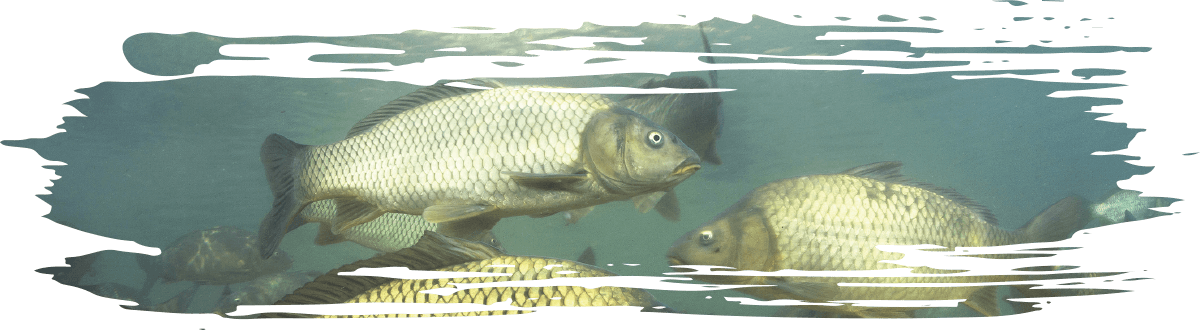
One of your studies explored the occurrence and transfer of mycotoxins from ingredients to fish feed and fish meat in common carp (Cyprinus carpio) farmed in Serbia. What motivated this research, and what were the key findings regarding mycotoxin prevalence and transfer?
Increasing frequency of extreme weather conditions, both globally and in Serbia, has led to a higher prevalence of mycotoxins in grains.
⇒ This has naturally raised the question of what happens to fish fed with such grains, and subsequently, to humans who consume fish that have ingested mycotoxin-contaminated feed.
The primary conclusion of this research is that most mycotoxins detected in fish fillets remain below legally permitted limits. However, a crucial question remains:
 What is the synergistic effect of these co-occurring toxins on fish health and, more importantly, on the health of human consumers?
While mycotoxins are well studied in terrestrial livestock, they are still an emerging concern in aquaculture. Based on your experience, what are the main knowledge gaps and research priorities in this area?
That is a very challenging question…
Some of the major gaps, in my opinion, include:
1. Lack of information about the water stability and leaching dynamics of mycotoxins.
2. Limited understanding of species-specific susceptibility to mycotoxins among different fish species.
Most toxicity limits are a copy-and-paste of information obtained from poultry or swine research and do not consider the substantial differences in fish gut physiology, detoxification pathways, immune reactivity, and microbiome composition.
⇒ Therefore, there is a need for fish-specific toxicity limits.
3. Minimal amount of data on co-exposure and masked mycotoxins, and only a few studies—conducted in a very limited number of species (despite there being over 300 aquacultured species globally)— address chronic subclinical effects such as growth suppression, microbiome drift, reproductive damage, and many others.
Aquaculture feed production often relies on agricultural by-products, which can be contaminated with multiple mycotoxins. In your view, how should feed manufacturers and producers approach risk assessment and mitigation in this context?
Aquaculture feed producers still treat mycotoxin risk like an annoying side quest rather than the core threat it actually is.
If they want to stay competitive, I strongly recommend that they treat mycotoxins as a chronic, multi-toxin, systemic problem, not an occasional contaminant.
You have contributed to multiple studies on antimicrobial resistance in bacteria isolated from fish and aquatic environments. Do you see any interaction—direct or indirect— between antimicrobial resistance and feed-borne contaminants like mycotoxins?
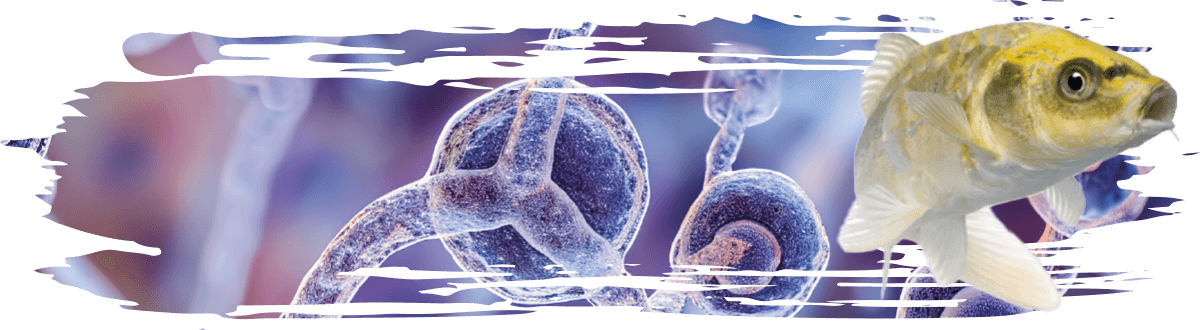
Yes, significant evidence exists for both direct and indirect interactions between antimicrobial resistance (AMR) and mycotoxins in other species and environments.
DIRECT INTERACTIONS
These interactions create a “synergistic” threat to public health and animal productivity by simultaneously:
 Encouraging the growth of resistant bacteria
- Weakening the tools we use to treat them.
These toxins also create an environment of “cross-resistance” in which bacteria evolve to survive both fungal toxins and antibiotics simultaneously.
INDIRECT INTERACTIONS
Mycotoxins weaken the host immune system and cause gut imbalances, leading to:
- A higher dependency on antibiotics.
- The proliferation of opportunistic and potentially resistant pathogens.
Furthermore, clinical signs of mycotoxicosis together with the presence of opportunistic pathogens often lead to a misdiagnosis of this complex pathology as a simple bacterial infection.
 Such errors are further exacerbated by non-prudent (inappropriate and/or unwarranted) use of antibiotics, which in turn drives the development of AMR.
Based on your experience in fish immunology and aquaculture microbiology, how might mycotoxins influence the effectiveness of vaccination strategies in aquaculture species? Are there specific challenges or mechanisms that warrant further investigation?
Mycotoxins are potent immunosuppressants that, among other consequences, can reduce the activity of immune cells.
⇒ This not only makes fish more susceptible to infections but also significantly reduces the efficacy of vaccines, increasing reliance on the therapeutic use of antibiotics.
Further investigations will help us achieve a deeper understanding of:
- ⇒ The specific impact of emerging contaminants such as beauvericin and enniatins on vaccine-induced immunity.
- ⇒ How specific immunostimulants, either in combination with or as stand-alone mycotoxin-binding agents (such as modified clinoptilolites or enzymatic detoxifiers), can be integrated into vaccination protocols to restore or rescue host immune competence in mycotoxin-contaminated environments.
You participated in the COST Action BETTER*, which focuses on enhancing biosecurity through training and awareness. How does biosecurity intersect with mycotoxin management in aquaculture, and what steps can be taken at the farm level to improve both?
One of the primary biosecurity steps in aquaculture is ensuring appropriate, pathogen-free feed. Therefore, steps to improve biosecurity measures specifically regarding mycotoxins aimed at improving the prevention and control of their impacts on aquaculture production and human food safety, could include:
 Requiring multi-mycotoxin certificates of analysis (COAs) from suppliers.
- Prioritization of “low-moisture” certified grains (below 14–15 %) throughout the production process to prevent post-harvest mold growth.
- On-site measures, such as the use of hermetic or climate-controlled storage areas and the inclusion of “feed safety” in standard biosecurity checklists, can be integrated into facilityspecific biosecurity programs. This, for example, includes inspecting silos for leaks, pests, and old feed residues that act as fungal reservoirs.
- On the feed mill side, the incorporation of broad-spectrum mycotoxin binders or enzymatic detoxifiers into rations, combined with immunomodulators such as β-glucans to repair toxin-induced damage, is also part of good biosecurity practice.
- The introduction of rapid, on-site diagnostic kits (such as lateral flow assays) for “spot-checking” feed batches upon arrival, rather than waiting weeks for external laboratory results.
*COST Action BETTER (CA20103) is a European networking project focused on improving on-farm biosecurity by: mapping what’s actually done, understanding why people do or don’t implement measures, comparing biosecurity evaluation methods, and building better training/communication for vets, farmers, and other stakeholders. It ran 21 Oct 2021 – 20 Oct 2025.
Within BETTER, a dedicated “Biosecurity in Aquaculture” subgroup was proposed in autumn 2022 to translate the Action’s biosecurity thinking to fish farms. It had 15 members from 9 countries (Albania, Croatia, France, Germany, Greece, North Macedonia, Norway, Serbia, Turkey). Their outputs include practical material such as how to evaluate biosecurity on fish farms, borrowing/aligning tools from BETTER (notably WG3) and fish-health biosecurity questionnaire frameworks.
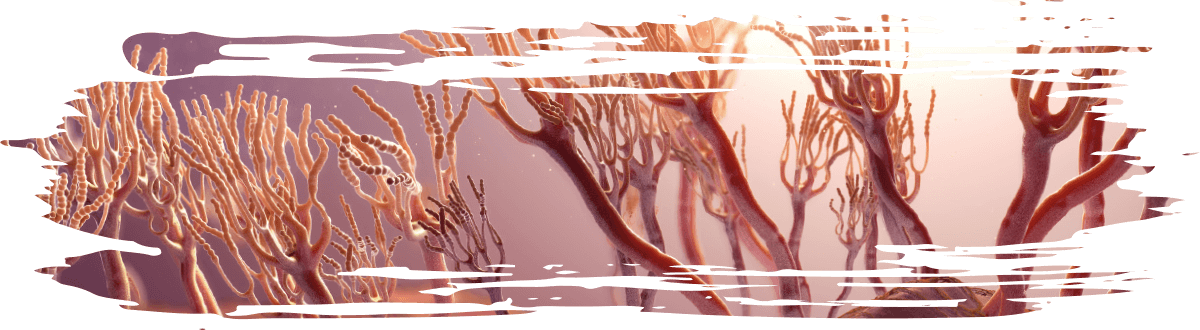
Climate change is increasingly altering mycotoxin profiles and microbial ecosystems. What potential risks do you foresee for aquaculture systems, particularly in regions like the Balkans, and how should the sector adapt?
I think the biggest threat is that, with the deterioration of climate conditions and the increase and diversification of mycotoxins, competition for mycotoxin-free grains will intensify, as these grains will be increasingly prioritized for human consumption and terrestrial livestock, reducing their availability and increasing costs for aquaculture.
Additionally, increasing concerns about the long-term sustainability of fish meal and oil used as major protein and oil sources in feed formulations, together with the development of higher-quality, lower–mycotoxin-risk fish meal and plant-based proteins, will inevitably lead to increased costs.
Therefore, the aquaculture sector may need to supplement these traditional feed compositions with alternative protein sources for fish, such as insects.
What advice would you give to young scientists or veterinarians interested in pursuing research at the interface of aquatic animal health, food safety, and environmental microbiology?
 Stay curious for as long as possible. Solving challenges in the field of aquaculture, especially those related to fish diseases, brings great satisfaction. The intensive development of aquaculture is opening multiple opportunities for many professions, including aquatic animal veterinarians.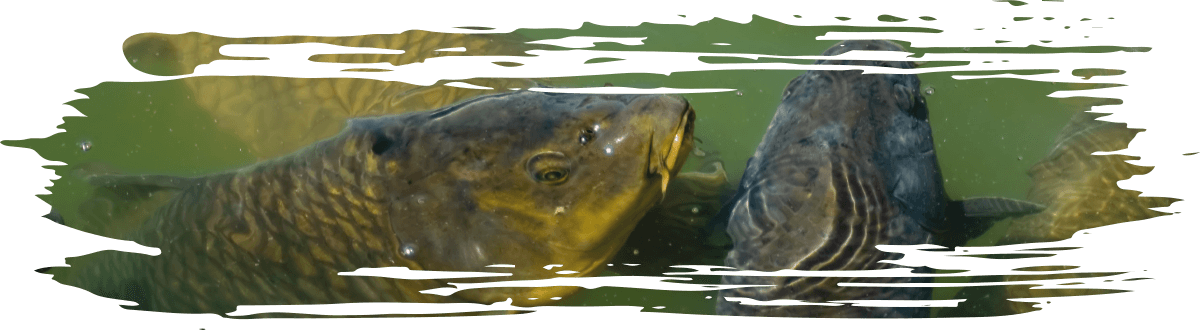
 Micotoxicosis prevention